Evaluating Seamless Military Camouflage Patterns for Professional and Personal Design Projects
In the realm of digital design, particularly within sublimation printing and textile manufacturing, the quality of the base asset often dictates the success of the final product. Among the most sought-after aesthetic categories are military-themed designs, which offer a rugged, tactical appeal that resonates with outdoor enthusiasts, gamers, and lifestyle brands. For creators looking to produce high-quality prints on items ranging from pillows and mugs to wall art and book covers, the choice of pattern is critical. This analysis explores the specific utility and technical advantages of using Seamless Military Camouflage Patterns, focusing on their application in commercial and personal creative workflows.
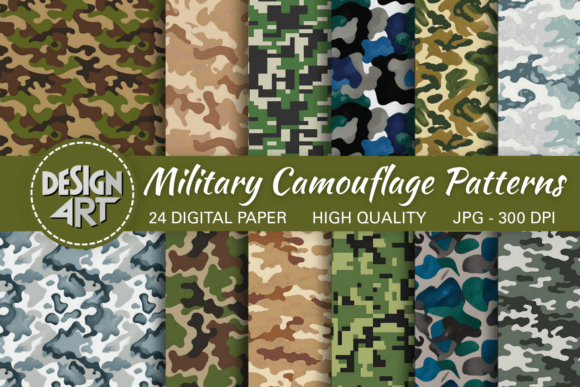
The core value proposition of this digital collection lies in its resolution and tiling capabilities. Users receive 24 distinct Military Camouflage Patterns JPG files, each rendered at a substantial size of 3072 x 3072 pixels. More importantly, these assets are generated at a high resolution of 300 DPI. In the context of print-on-demand and physical production, this specification is not merely a technical detail; it is a fundamental requirement for clarity. Low-resolution textures result in pixelation when scaled up, ruining the immersive quality of camouflage on large-format items like posters or fabric panels. By providing assets that meet professional print standards, this collection eliminates the need for time-consuming upscaling, which often introduces artifacts and blurriness.
Technical Specifications and Versatility
Understanding the technical parameters of these patterns helps designers evaluate their fit for various projects. The inclusion of 24 unique variations provides a broad spectrum of options, covering the three primary environments where camouflage is traditionally utilized: forest, desert, and urban settings. This variety allows for thematic consistency across different product lines without relying on repetitive imagery.
- Resolution: 3072 x 3072 pixels ensures that details remain sharp even when cropped or enlarged.
- Density: 300 DPI meets the industry standard for offset and digital printing, ensuring smooth gradients in shadow and highlight areas.
- Format: JPG files are universally compatible with major design software, including Adobe Photoshop, Illustrator, CorelDRAW, and Canva, facilitating an immediate workflow integration.
- Tiling: As seamless patterns, they can be repeated infinitely in any direction without visible seams, making them ideal for wrapping around cylindrical objects like tumblers and mugs.
This combination of attributes makes the collection suitable for a wide array of applications. Whether designing custom packaging, creating digital scrapbooking elements, or producing merchandise such as stickers and planners, the high fidelity of the images ensures that the final output looks authentic rather than generic. The "authentic tactical" description often found in product listings refers to the realistic texturing—mimicking the interplay of light, shadow, and natural debris found in real-world camouflage—rather than flat, cartoonish colors.
Comparing Seamless Patterns vs. Single-Image Textures
When selecting digital assets for design projects, creators often face a choice between single-image textures and seamless repeating patterns. While single images can work for small-scale applications like business cards or social media graphics, they present significant limitations for larger products. A single image placed on a large tote bag or a framed poster will require stretching, which distorts the aspect ratio and degrades image quality.
Seamless Military Camouflage Patterns solve this problem by allowing the texture to tile naturally. For example, when designing a backpack or a pair of cargo pants, the pattern must flow continuously over curves and folds. Non-seamless images would create obvious breaks in the visual field, breaking the illusion of the material. Furthermore, seamless patterns offer greater flexibility in layout. Designers can adjust the scale of the pattern within their design software to suit the specific dimensions of the product, whether it is a tiny sticker or a massive wall mural, without losing resolution.
Another point of comparison is vector-based camouflage versus raster-based (JPG) camouflage. Vector graphics offer infinite scalability but often lack the organic, gritty texture that defines realistic military camo. They can appear too clean or geometric. Raster images, like those provided in this 300 DPI collection, capture the noise, grain, and subtle color variations of real-world materials. For audiences seeking a rugged, outdoorsy aesthetic, the raster format of these seamless patterns is generally superior because it mimics the imperfections of nature more effectively than clean vector lines.
Application Across Different Product Categories
The versatility of these 24 patterns extends across multiple sectors of the creative economy. Here is how they compare in utility across different use cases:
Apparel and Textiles
In the fashion and accessory market, camouflage remains a staple. However, consumer expectations for print quality have risen. Cheaply printed fabrics look washed out or blurry. Using 300 DPI seamless patterns ensures that the intricate details of the forest or desert blends are preserved during the sublimation process. This is particularly important for complex garments where the pattern must wrap around sleeves and hems without jarring interruptions.
Home Decor and Wall Art
For interior design, specifically in themes related to hunting, military history, or rustic modern aesthetics, framed artwork and posters are popular choices. A 3072-pixel width is sufficient for medium-sized prints (up to approximately 10x10 inches at 300 DPI, or larger if reduced slightly in DPI). For larger formats, the seamless nature allows designers to composite multiple instances of the pattern to create a larger canvas while maintaining the high-definition edge details.
Digital Products and Stationery
The rise of digital planning and scrapbooking has created a demand for high-quality digital papers. These patterns can be used directly in digital notebooks, invitations, and e-cards. The JPG format ensures easy compatibility with PDF creation tools, allowing designers to bundle these patterns into digital kits for sale on platforms like Etsy. The 24 variations provide enough diversity for customers to create cohesive themes without needing to source additional assets.
Evaluating Tradeoffs and Limitations
No digital asset is perfect, and understanding the limitations of this collection is crucial for informed decision-making. While the 300 DPI resolution is excellent for print, it does not equate to vector scalability. If a designer needs to resize a logo *within* the pattern infinitely, they cannot do so without loss of quality. Additionally, while JPG is a convenient format, it is lossy. For archival purposes or maximum editing flexibility, TIFF or PNG formats might be preferred by some professionals, though JPG is widely accepted for end-product delivery.
Another consideration is the specificity of the theme. Military camouflage is a niche aesthetic. While it appeals strongly to a dedicated segment of the market, it may not be suitable for corporate branding, healthcare, or educational materials where neutrality is preferred. Creators must assess their target audience carefully. The "tactical" vibe is powerful but polarizing; it works best for products targeting outdoor hobbies, gaming communities, or patriotic themes.
Furthermore, while 24 patterns offer good variety, they represent a static set. Designers looking for highly customized, AI-generated unique variations might find this collection limiting compared to generative tools. However, for those prioritizing reliability, consistency, and immediate usability, pre-made high-quality assets save significant time compared to generating and refining custom textures from scratch.
Decision Factors for Buyers
When deciding whether to utilize Seamless Military Camouflage Patterns, consider the following factors:
- Print Volume and Quality: If you are producing physical goods, the 300 DPI requirement is non-negotiable for professional results. This collection meets that bar.
- Workflow Efficiency: Do you need assets that are ready to use? Seamless JPGs drop directly into design templates, reducing setup time.
- Thematic Consistency: Are you building a brand around outdoor or tactical themes? The authenticity of these textures supports that narrative better than generic stock photos.
- Scalability Needs: Do your projects involve wrapping patterns around objects? Seamless tiling is essential for this technique.
In conclusion, this collection of Seamless Military Camouflage Patterns serves as a robust resource for designers and makers who prioritize quality and realism. By offering high-resolution, seamlessly tiling JPG files, it addresses the common pain points of pixelation and awkward cropping found in lower-quality alternatives. While it may not replace the need for custom vector work in every scenario, it stands out as a practical, efficient, and visually compelling option for anyone looking to integrate authentic military aesthetics into their sublimation, print, or digital design projects.